

Ruby
Burmese (Mogok and Mong Hsu), Mozambican, Thai and Madagascan. Unheated material with a laboratory origin report commands a very substantial premium and is our strongest area of demand.
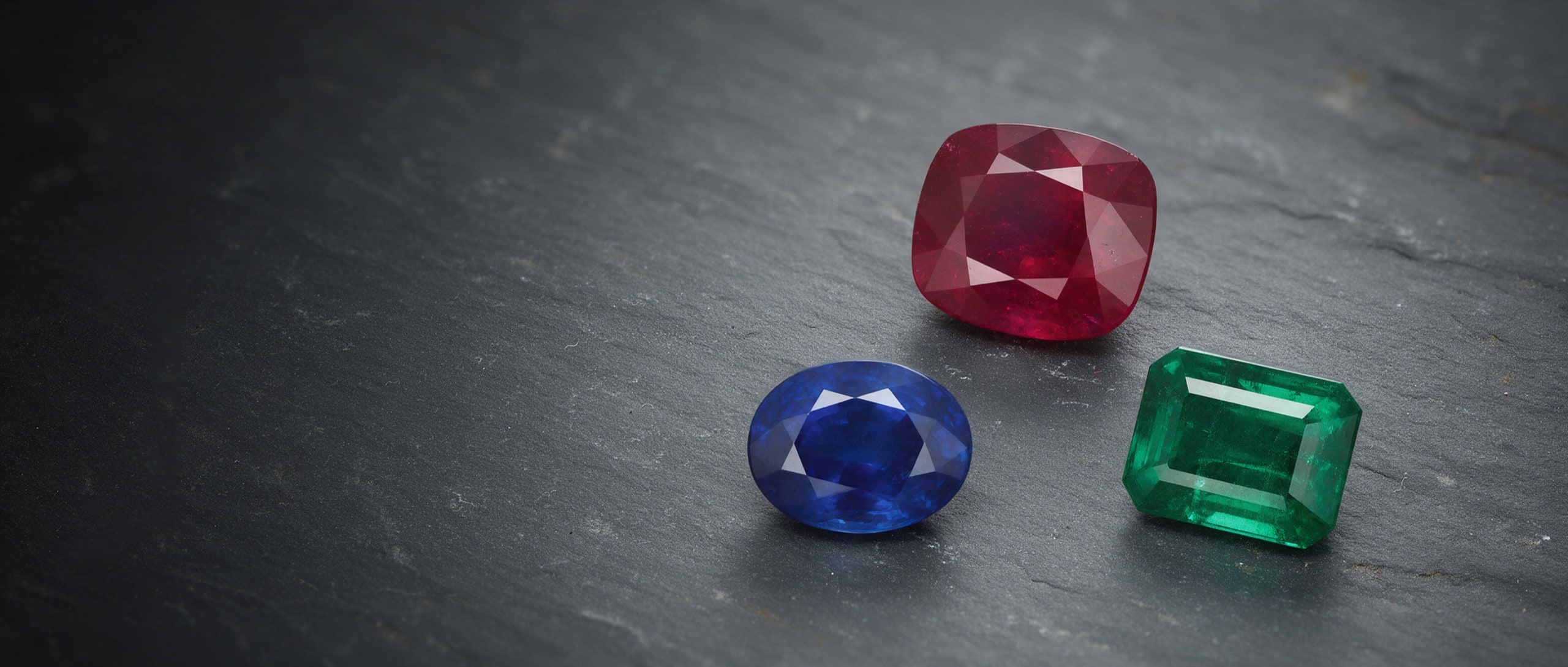
We Buy — Coloured Gemstones
Sell unheated rubies, Kashmir and Ceylon sapphires, Colombian emeralds, Paraíba tourmaline and rare coloured stones. Origin-aware valuation by a Dubai house trading since 1983.
Diamonds are a commodity; coloured stones are not. Two rubies of identical weight and clarity can differ in value twentyfold, and the difference rests on things no price list captures — whether the colour is the pure red the trade calls pigeon’s blood, whether the stone has seen heat, and whether a laboratory will certify Burma rather than Mozambique.
That judgement cannot be acquired quickly. Our partners have bought colour since the 1980s, through the opening of Mozambique and the arrival of Paraíba. If your stone is heated, filled or over-oiled, you will hear it in the first conversation — with a real number attached.
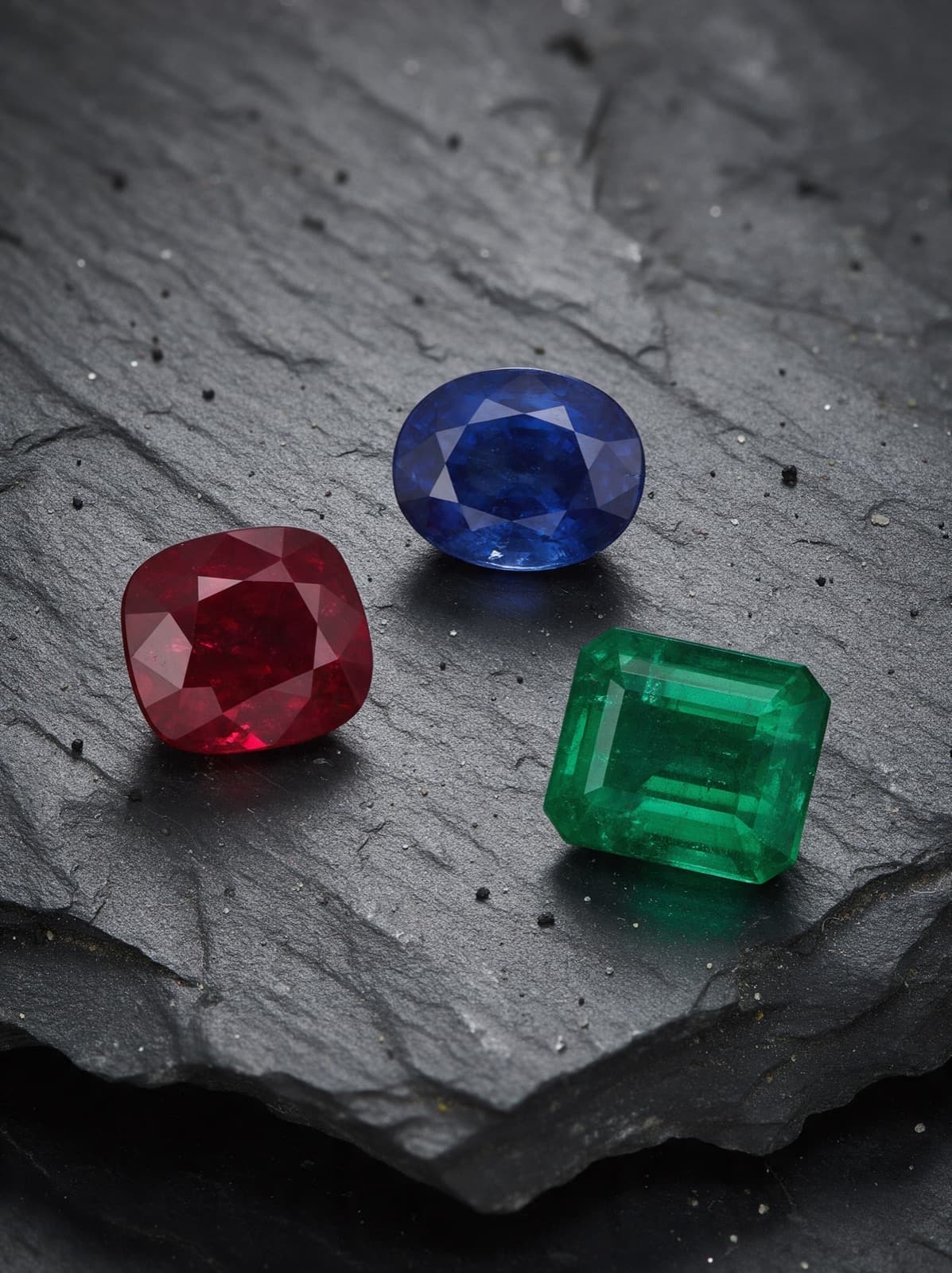
Key facts
Specifically
If your piece is not listed here, it does not mean we are not interested — it means it is unusual enough to warrant a conversation.
Burmese (Mogok and Mong Hsu), Mozambican, Thai and Madagascan. Unheated material with a laboratory origin report commands a very substantial premium and is our strongest area of demand.
Kashmir, Burmese and Ceylon blues, plus Padparadscha, pink, yellow and the full fancy range. Kashmir material with a GÜBELIN or SSEF origin report is exceptionally sought after.
Colombian (Muzo, Chivor, Coscuez), Zambian and Brazilian. We assess the degree and type of clarity enhancement precisely — insignificant, minor, moderate or significant — because it moves the number materially.
Brazilian, Mozambican and Nigerian. Copper-bearing material with the characteristic neon blue-green, supported by laboratory confirmation of copper content.
Mahenge and Burmese spinel, Russian and Brazilian alexandrite with strong colour change, demantoid garnet, tsavorite, imperial topaz and fine tanzanite.
Type A jadeite — imperial green through lavender — and natural, non-cultured pearls with laboratory confirmation. Both markets are driven by Asian and Gulf demand we access directly.
What moves the price
We show our working on every offer. These are the factors we weigh, in roughly the order they matter — so you can see where the money is before you hear the figure.
Kashmir, Burma and Colombia carry premiums that can multiply value several times over identical material from newer deposits. Origin must be laboratory-confirmed to be priced.
Unheated ruby and sapphire trade at a large multiple of heated equivalents. In emerald, the accepted convention is oiling; the question is degree, and whether resin has been used.
Hue, tone and saturation together, judged in daylight-equivalent lighting. A stone that is too dark or too light is penalised even when the certificate reads perfectly.
An eye-clean emerald is a rarity and priced as one; an eye-clean sapphire is an expectation. Clarity is always judged against what is normal for the material.
Coloured stones are cut to save weight, so windowing, extinction and poor symmetry are common — and costly. A well-proportioned stone that returns light across the whole face is worth a clear premium.
Above five carats, fine colour becomes genuinely scarce and prices accelerate. Matched pairs and suites are worth considerably more than the sum of their parts.
Questions
Yes, and the multiple surprises most sellers. Heat treatment is applied to the overwhelming majority of rubies and sapphires on the market, so untreated material of fine colour is genuinely rare. Depending on size, colour and origin, an unheated Burmese ruby with a GÜBELIN or SSEF report can trade at five to twenty times the price of a comparable heated stone. This is precisely why a laboratory report matters so much in colour — without it, the market assumes treatment and prices accordingly.
Almost certainly. Oiling is a traditional and accepted practice in emerald — well over ninety percent of fine emeralds on the market have been clarity-enhanced in some way. What matters is the degree, which laboratories grade as insignificant, minor, moderate or significant, and whether the filler is cedarwood oil or a hardened resin. Insignificant-to-minor oiling in a fine Colombian stone barely dents the value. Significant resin filling does, and we will be straightforward with you about which one you have.
We can form a well-informed view from inclusion patterns, colour behaviour and fluorescence, and after four decades that view is usually right. But a view is not a document, and the market pays for the document. Where a stone is valuable enough for origin determination to change the price meaningfully, we submit it to GÜBELIN, SSEF or AGL at our own cost as part of the valuation, and you see the report regardless of whether you sell to us.
Both. With a signed piece — a Bulgari sapphire suite, a Van Cleef emerald necklace, a Cartier ruby bracelet — the mount often carries as much value as the stones, and dismantling would destroy that. We price the piece as a whole and as components, and recommend whichever serves you better.
Enquire
A photograph and a report number are enough to begin. We reply within one working day with an indicative range and the benchmark behind it.
Everything you send is read by a principal in Dubai and goes no further.